Let's dive in.
Step 1: Set Up the Base Line Chart
Start with a regular line chart - functional, but not impressive.
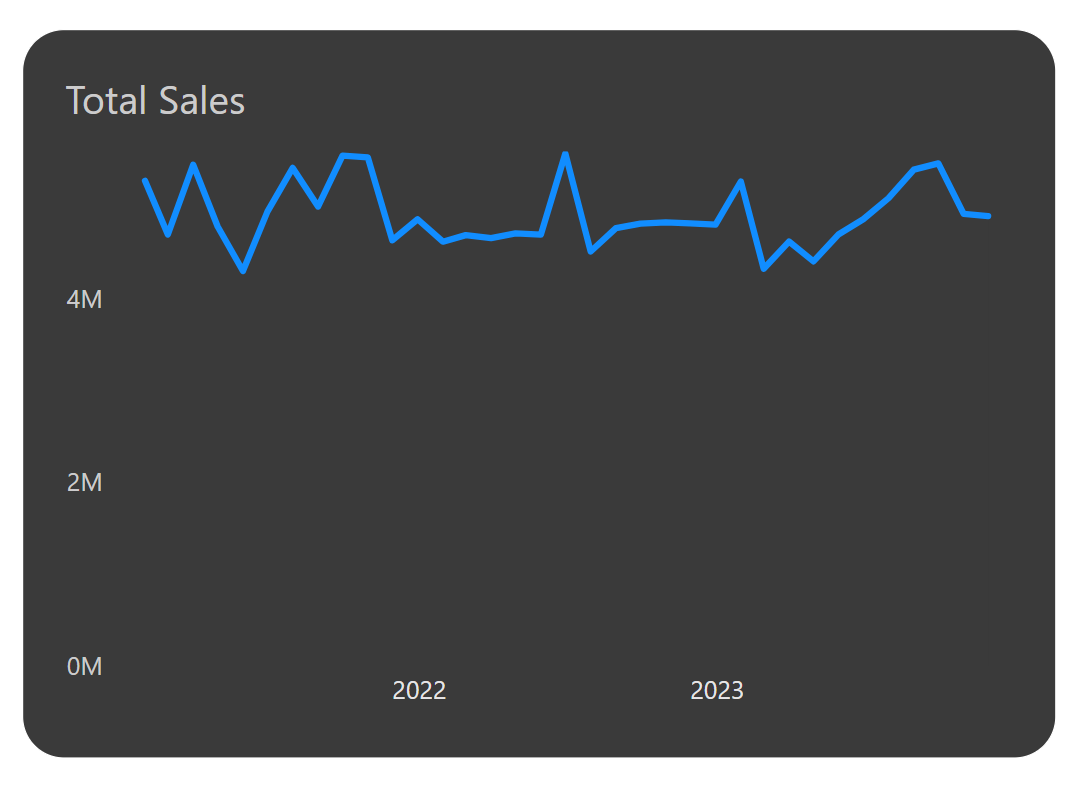
We’ll transform this into a dynamic, gradient-rich visual.
Step 2: Control Y-Axis with a MeasureTo make space above the line, control the Y-axis maximum dynamically.
Create a measure like:
Max Y =
MAXX(
ALLSELECTED(dimDate[MonthYear]),
[Total Sales]
) * 1.5
Apply it to the Y-axis maximum via the fx option.
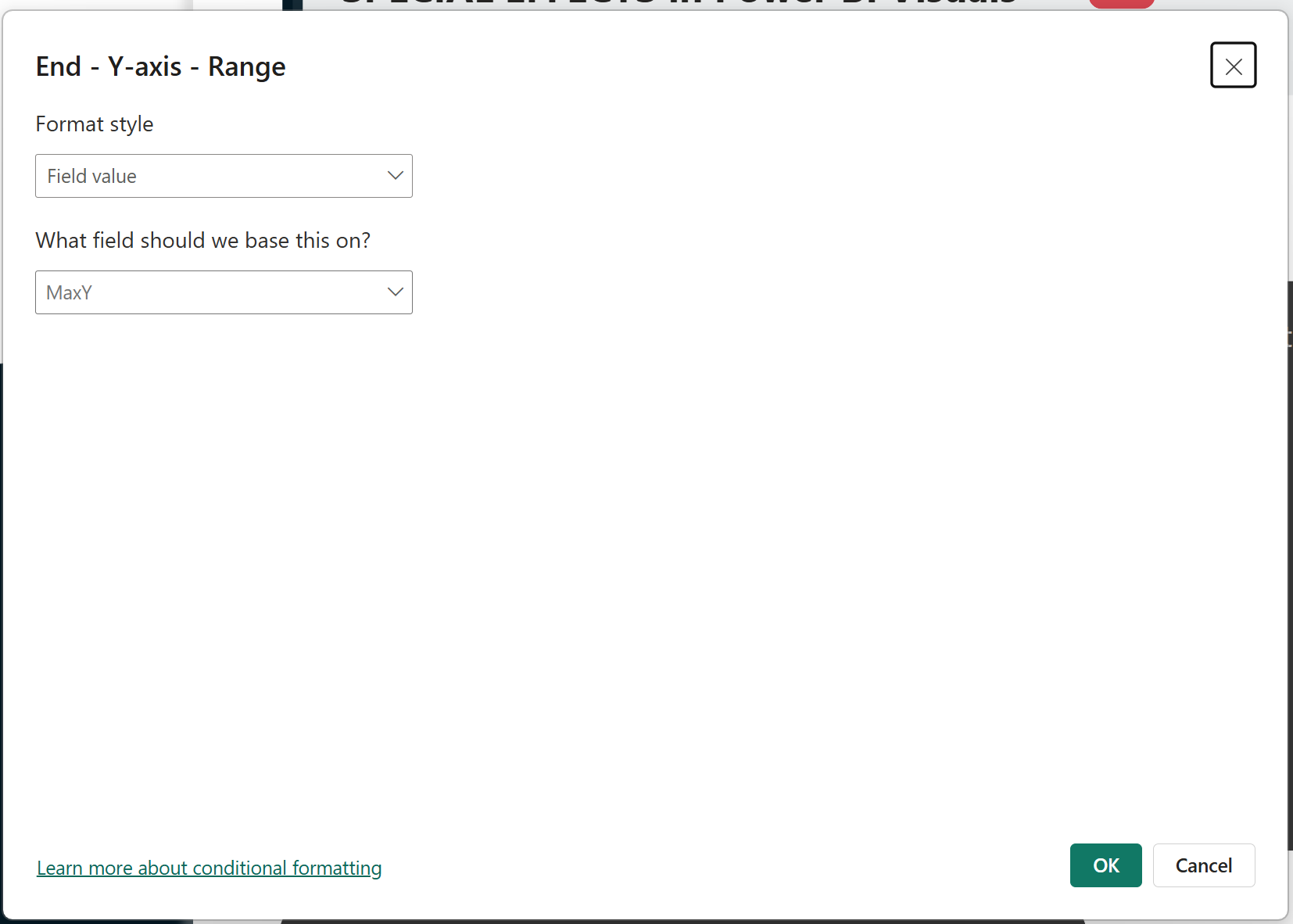
This pushes the line downward, creating space for visual effect above it.
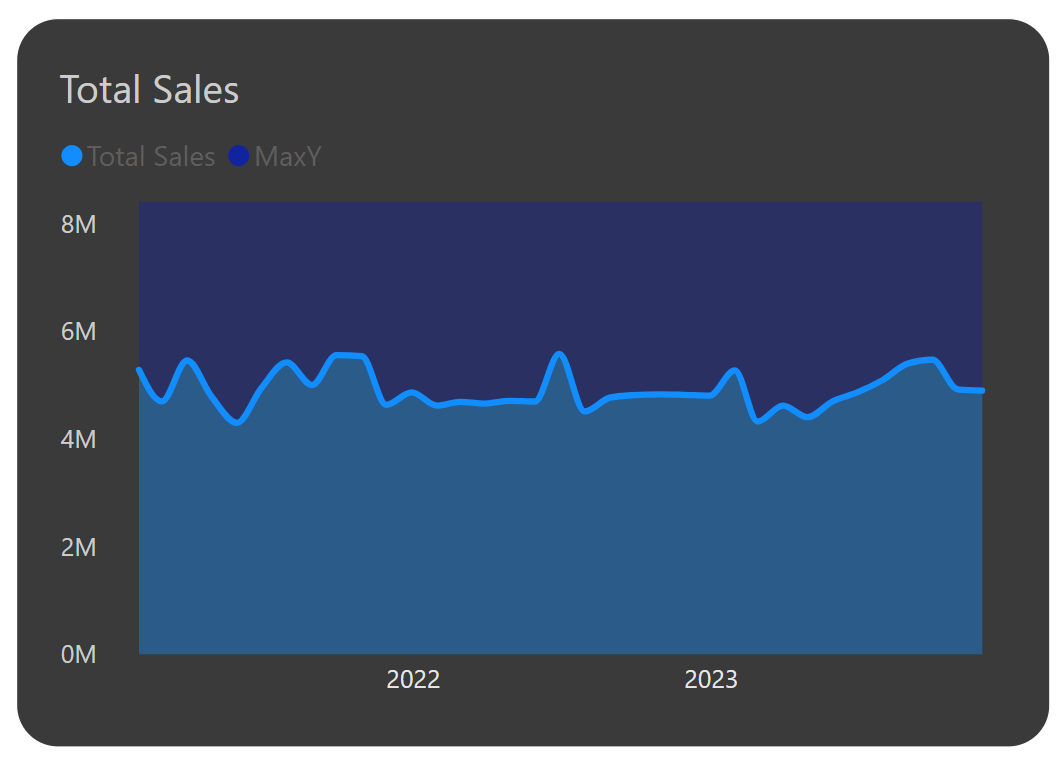
Step 3: Simulate Gradient with Stacked Area ChartSince Power BI doesn’t support gradient lines directly, switch to a
stacked area chart.
1. Add Total Sales as the first measure.
2. Add the Max Y measure as the second.
Now you have two layers: one below the line, one above it.
Step 4: Insert a Dummy Measure for Line SimulationCreate a dummy measure, e.g.:
Dummy = [Total Sales] * 0.04
Place it between the two other measures in the Y-axis field well.
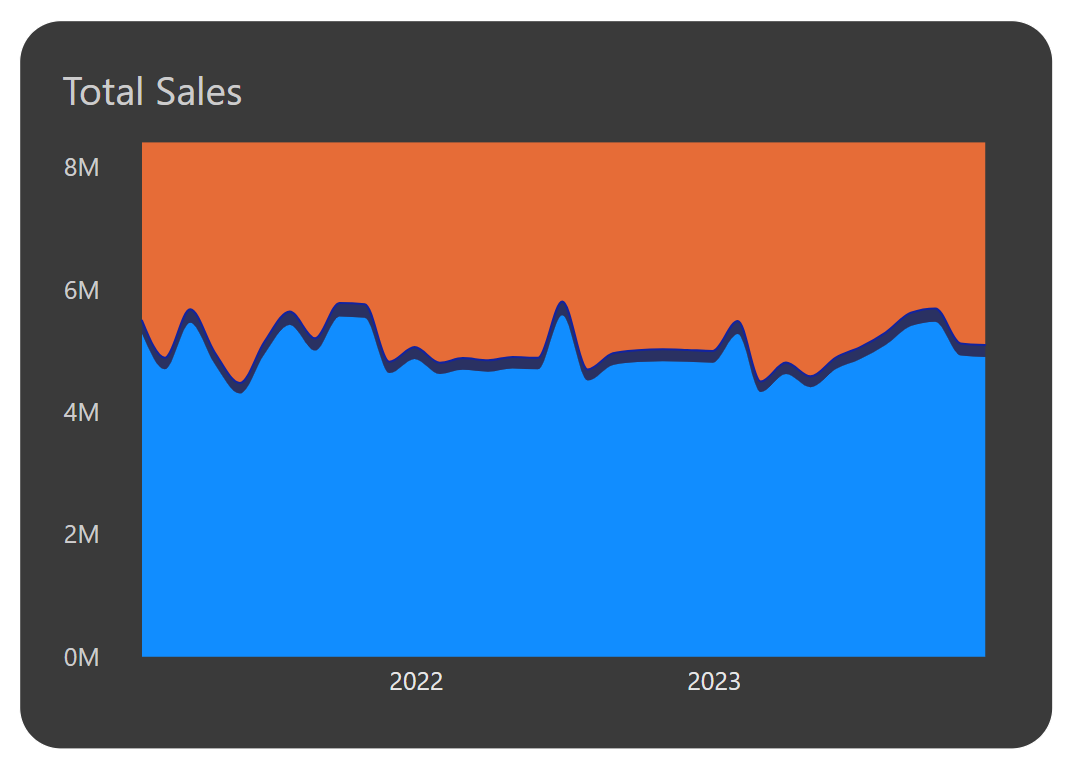
You’ll now see a “line” appear between the shaded areas. Change its color (e.g., pink) and set transparency to 0%.
Step 5: Hide the Colored Areas
Now make both Total Sales and Max Y match the background color of your report page.
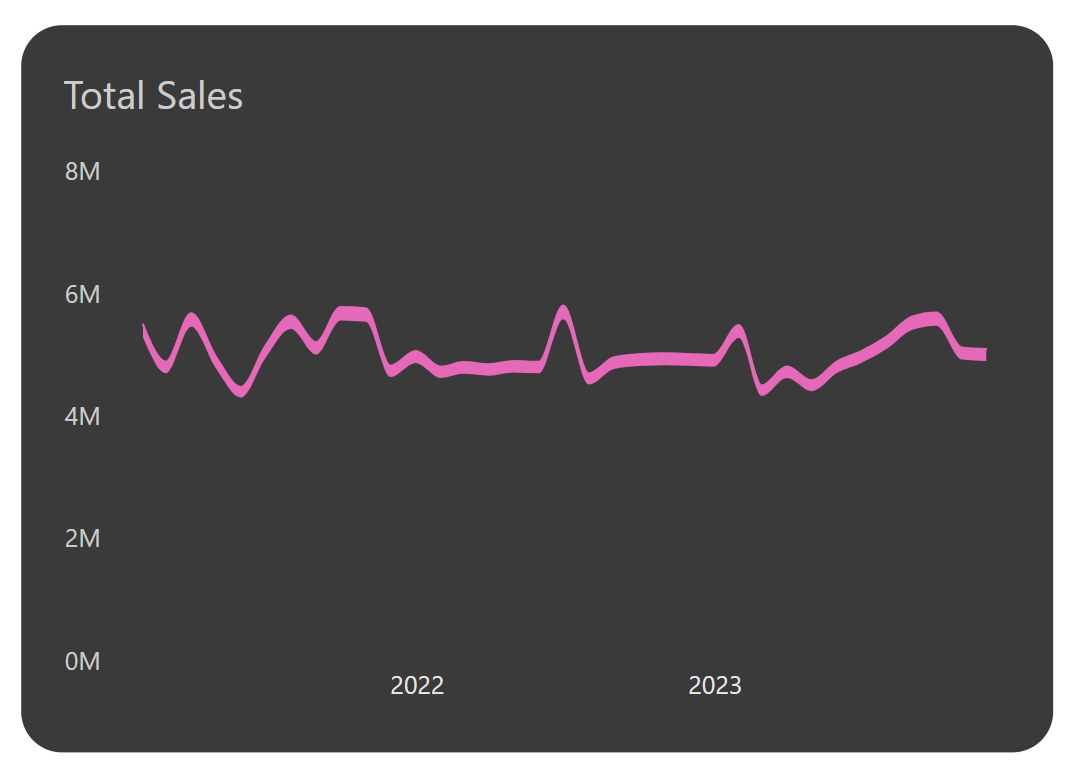
What’s left is the dummy “line,” acting like a stylized visual.
Step 6: Add a Gradient Background via SVG
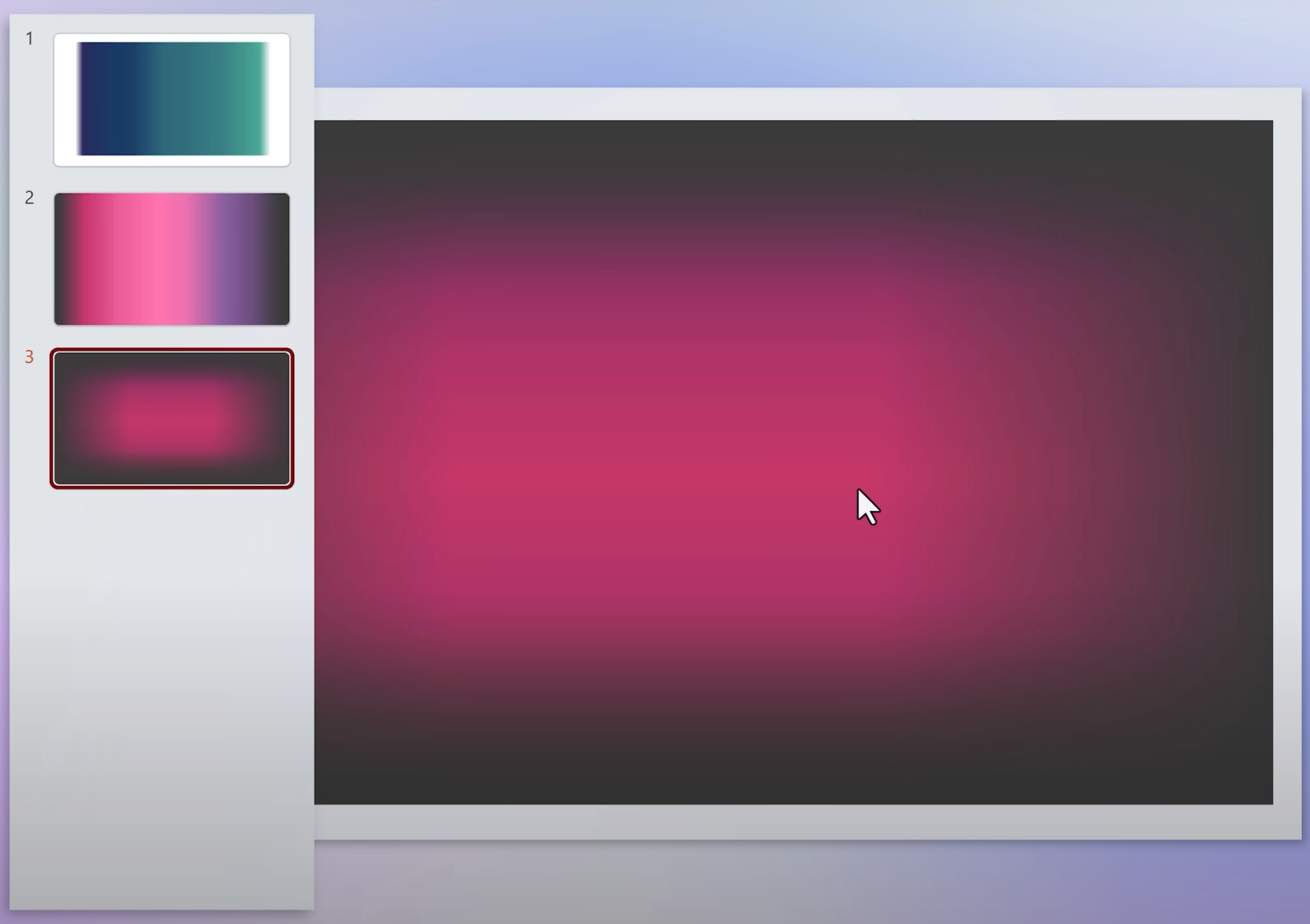
To simulate a gradient glow, create a gradient SVG background in PowerPoint:
1. Create a rectangle with a gradient fill.
2. Save it as SVG via File → Save As → SVG.
Back in Power BI:
1. Go to your visual's Plot Area → Image background.
2. Upload your SVG gradient.
3. Adjust Image Fit to Fit or Fill.
4. Turn off the shade area of the Dummy measure
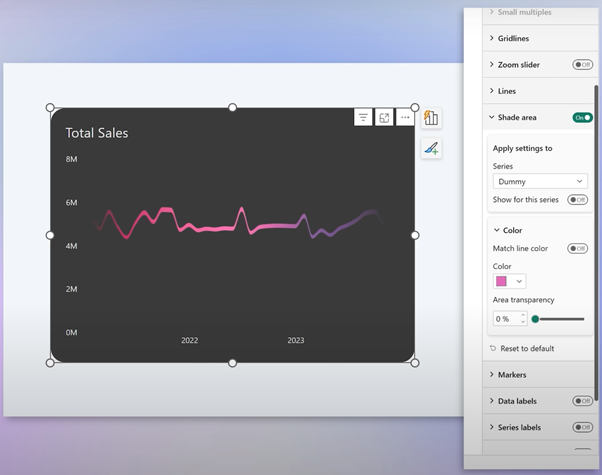
Now you’ll see the gradient glow shine through!
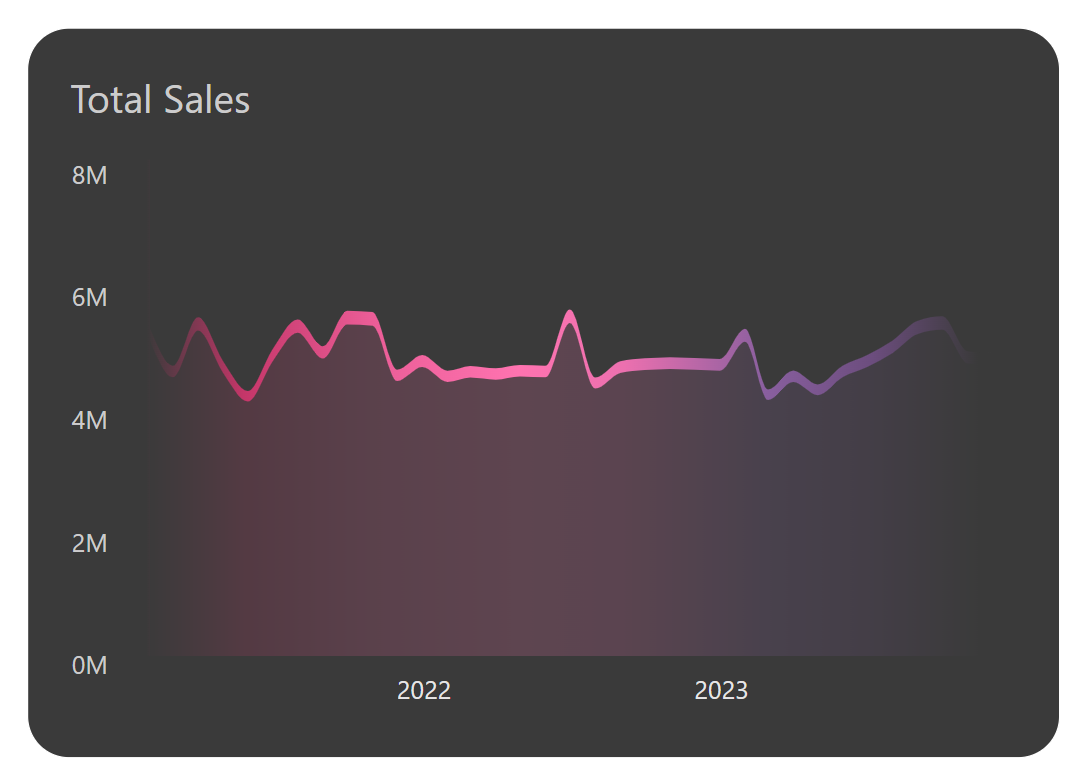
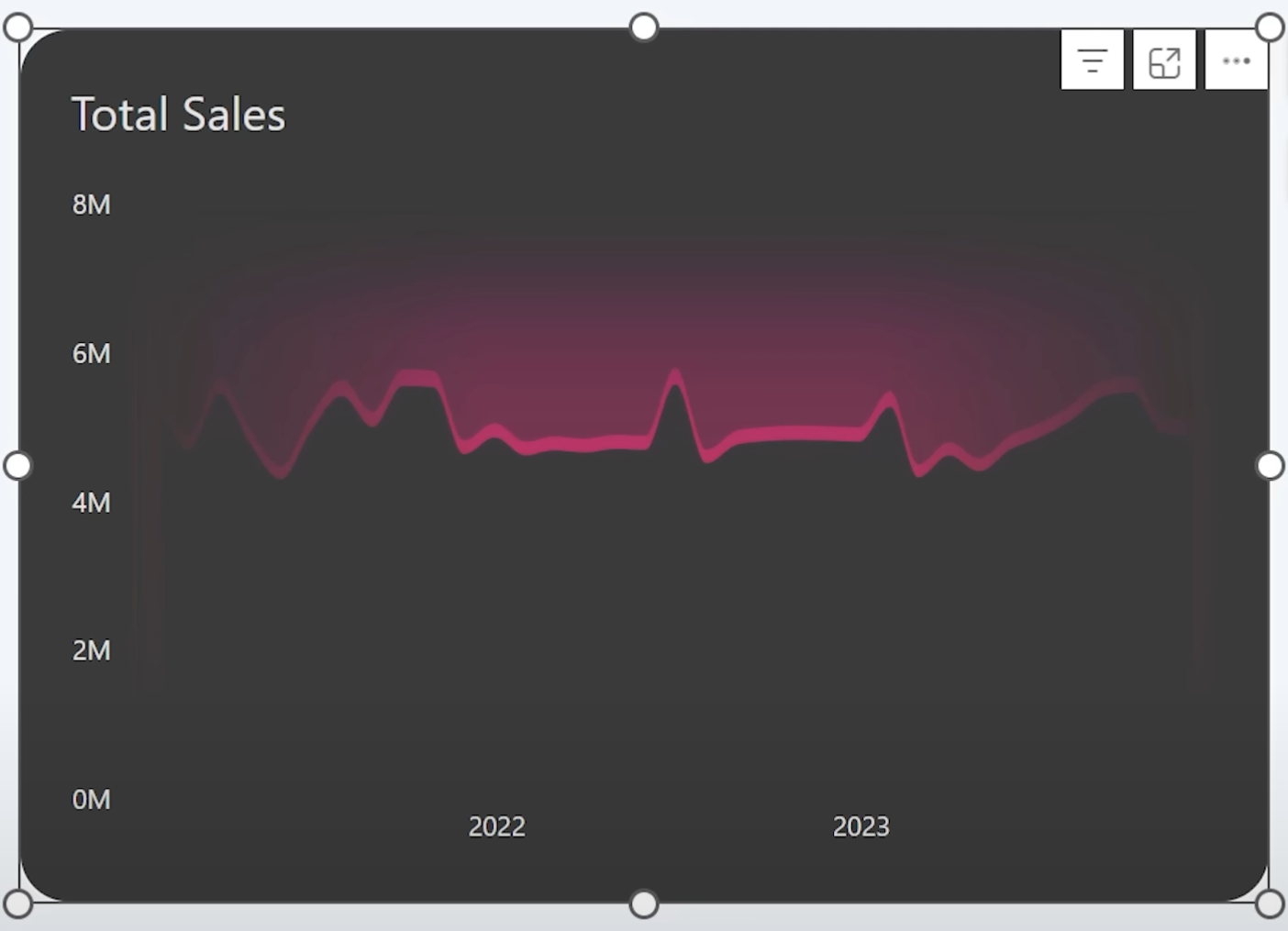
Step 7: Let the Background Shine
To complete the effect:
1. Select the Total Sales series.
2. Set its area transparency to 18%.
Step 8: Add a KPI Value (Optional)
You can add a KPI card just above the visual:
• Add a KPI visual with total sales.
• Remove background, border, and labels.
• Use a matching font and color.
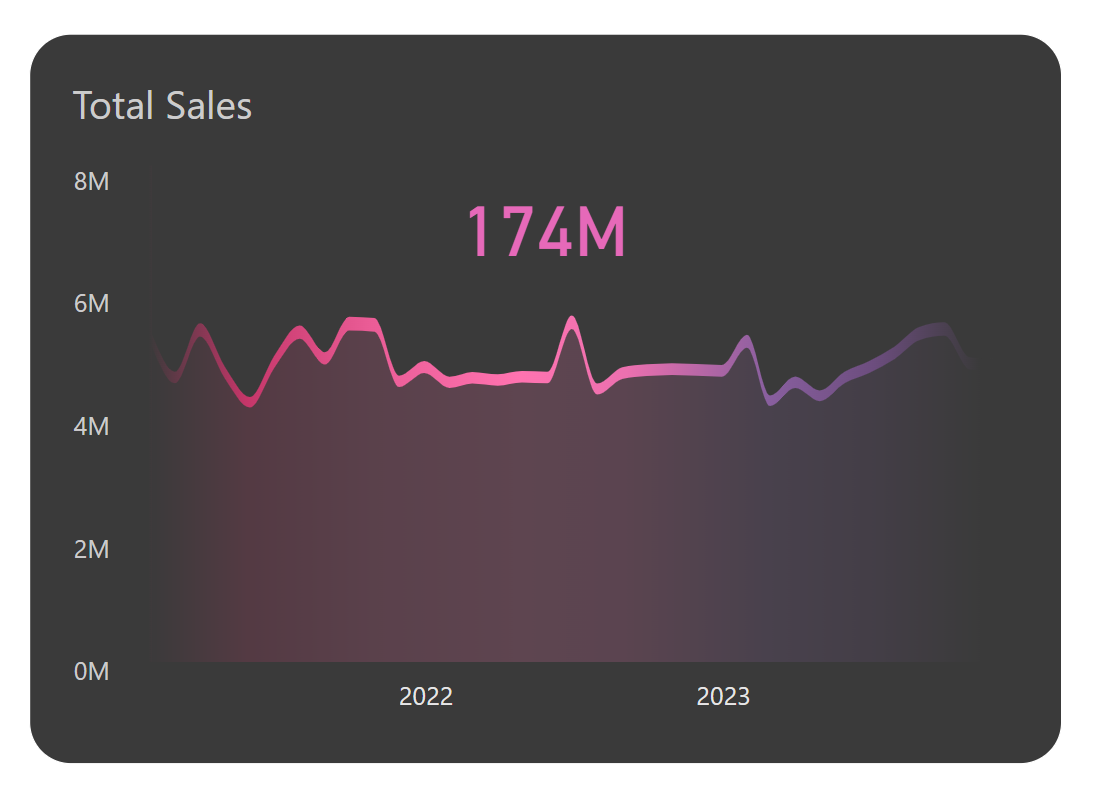
Step 9: Try Different Gradients and Layouts
Want to adjust the mood?
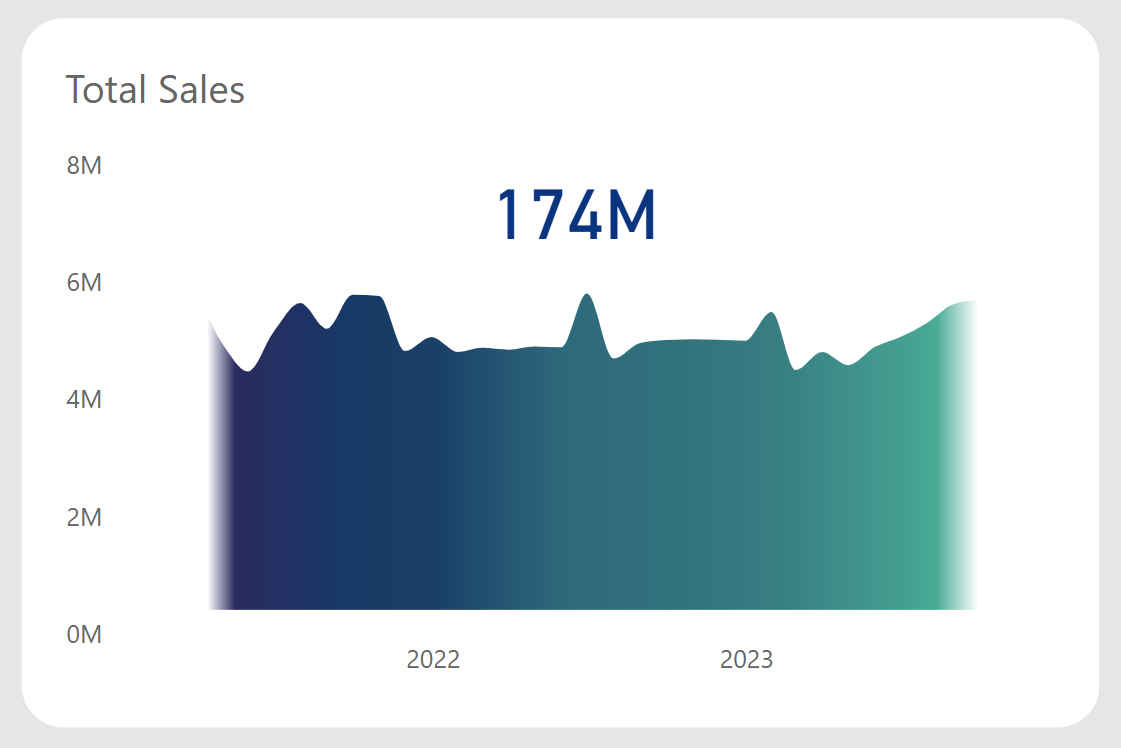
• Swap the SVG for a different gradient style (e.g., darker or more subtle).
• Flip the visual by hiding the bottom color instead of the top.
• Apply to visuals with white backgrounds for clean KPI cards.
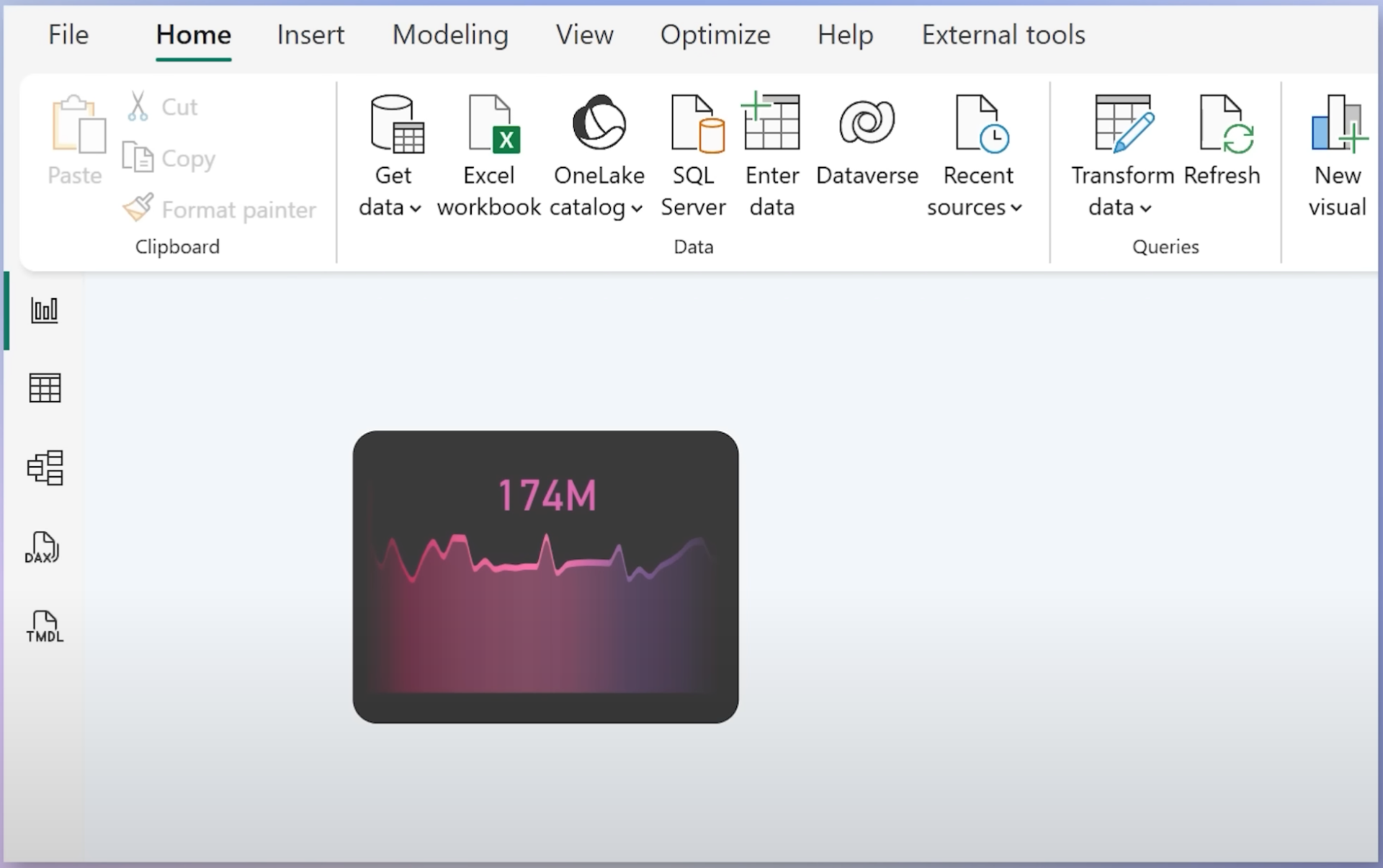
Final Example: KPI Card with Trendline Glow
Hide X/Y axes and minimize space. You now have a beautiful, glowing trendline for your KPI.
Final Thoughts
This technique isn't officially supported - but it's incredibly powerful.
It combines:
• Power BI measures for layout control,
• SVG gradients from PowerPoint,
• Clever formatting tricks for transparency and layering.
Whether you want to impress in a demo or make your dashboard visually engaging, this is a trick worth adding to your toolkit.
Hope you like it!
Give it a try and see how it works for you! I’d love to hear what you think or see how you use this trick in your own reports.