
How to Power BI
>LEARN WITH ME
Trainings
>EXPERT INSIGHTS
All 26 fonts, in the order the dropdown:
Arial
Arial Black
Arial Unicode MS
Calibri
Cambria
Cambria Math
Candara
Comic Sans MS
Consolas
Constantia
Corbel
Courier New
DIN
DIN Light
Georgia
Lucida Sans
Unicode
Segoe UI
Segoe UI Light
Segoe UI Semibold
Segoe UI Bold
Symbol
Tahoma
Times New Roman
Trebuchet MS
Verdana
Wingdings.
Download your brand font and install it locally. Right-click the .ttf or .otf file and choose "Install for all users" if you have admin rights.
Power BI reads fonts from the operating system, so the font has to be sitting on the machine that renders the report. That one detail causes most of the trouble in Step 5. This is also one of the main cons for custom fonts in the first place.
Step 2: Export Your Current Theme
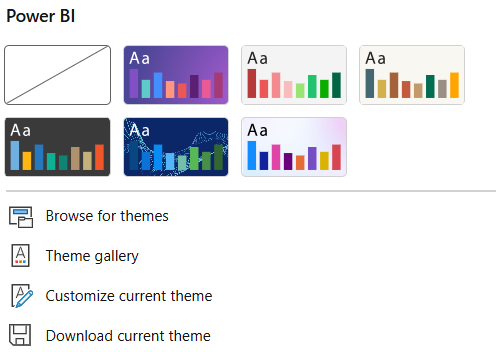
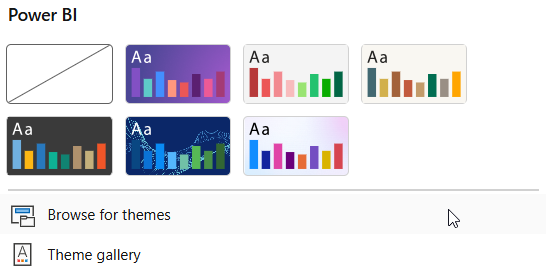
In Power BI Desktop, open View > Themes. You'll see Download current theme near the bottom, and on a fresh report it will be greyed out
Power BI won't export the Default theme, because Microsoft manages it as part of the product. The button only becomes available once the report has a custom theme applied. Two ways to get there:
Either way you end up with a JSON file that already contains
a palette.
Open the file in VS Code or Notepad. There are two places you can set fonts, and they behave differently.
textClasses is the clean option. It sets the font for whole categories of text at once:
Watch the property name. Inside textClasses it's fontFace, not fontFamily. Get that wrong and the theme still loads without complaint, it just ignores your font.
Four classes cover most of the report. callout is card numbers, title is visual titles, header is table and matrix column headers, label is data labels and axis text.
Look at the commas in that font list. Power BI writes your font name straight into CSS, so you can hand it a fallback stack exactly like you would on the web. First available font wins, and any name with a space goes in single quotes. Without one, viewers who don't have your font can end up with Times New Roman (default fallback), so always end the stack with a built-in font.
visualStyles is the surgical version. Use it when a single visual needs something different. The property there is fontFamily:
Two things to keep in mind:
View > Themes > Browse for themes, pick your JSON, done. Titles, headers, labels and card numbers should all switch immediately.
If nothing changed, the font name is wrong. Go back to Step 3 and copy it from Windows Settings rather than from the font file name.
Custom fonts render only when the font is installed. I publish the same report and opened the same visual three times: on my own machine it showed Roboto, on a colleague's PC it didn't, and on my phone it didn't either.
Power BI gives you no warning about this. It just substitutes and moves on. Before you ship anything, open it once somewhere that doesn't have your font installed, check if fallback works correctly.
* TIP
There's also the low-tech workaround: put the page title text in an
image background. It isn't elegant (or flexible), but for single report/page it bring the branding back and works on every machine.
Intro Session