This tutorial shows two ways to achieve the card visibility as required:
1. The old "card overlay trick"
2. A smarter, modern method using dynamic DAX logic and even custom placeholders
Let’s explore both.
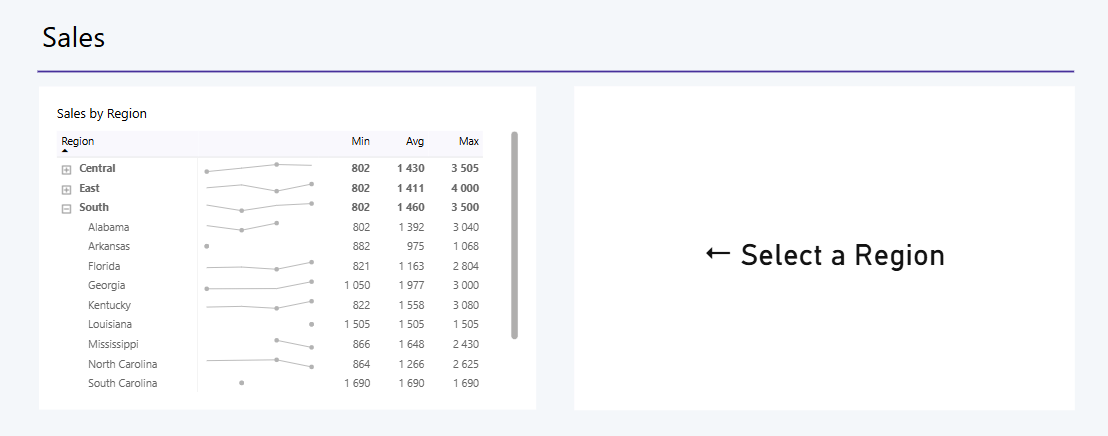
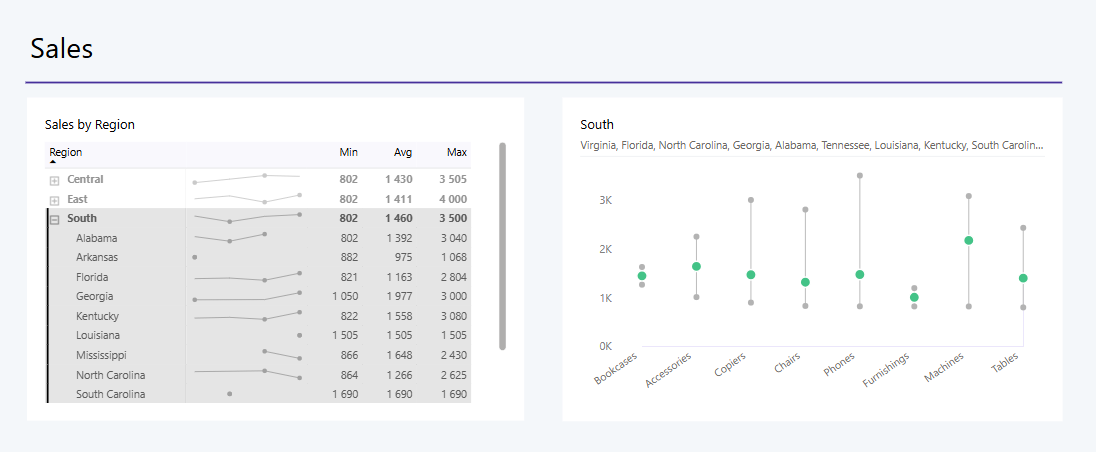
Method 1: Card Overlay Trick (Quick & Dirty)The idea: use a
card visual on top of the main chart to block it. When a selection is made, the card becomes
transparent using a DAX measure. It’s quick but has a big downside:
no tooltips.
Step-by-Step
1. Create a card visual and position it directly over your main chart.
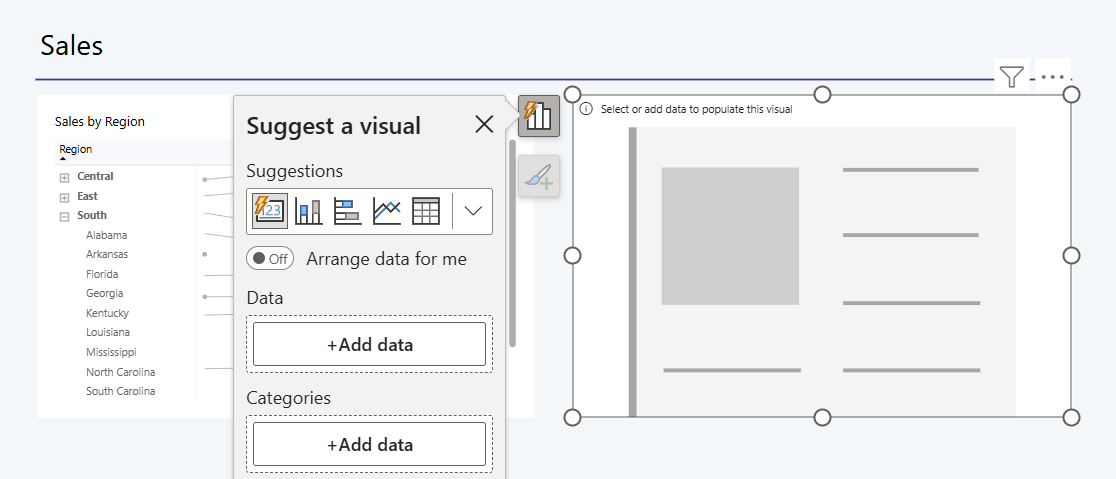
2. Add a placeholder text measure like:

3. Add it to the card. Format the font, remove the border, center it, and adjust size/color.
4. Create a transparency color measure using RGBA:
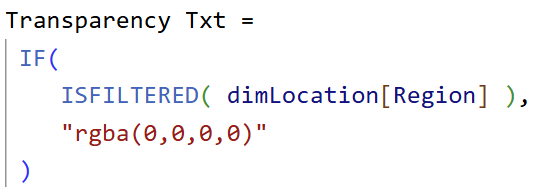
5. Apply this measure as conditional formatting to:
- Card text color
- Card background color
Now, the card hides the chart unless a region is selected. But tooltips won’t work due to the overlay.
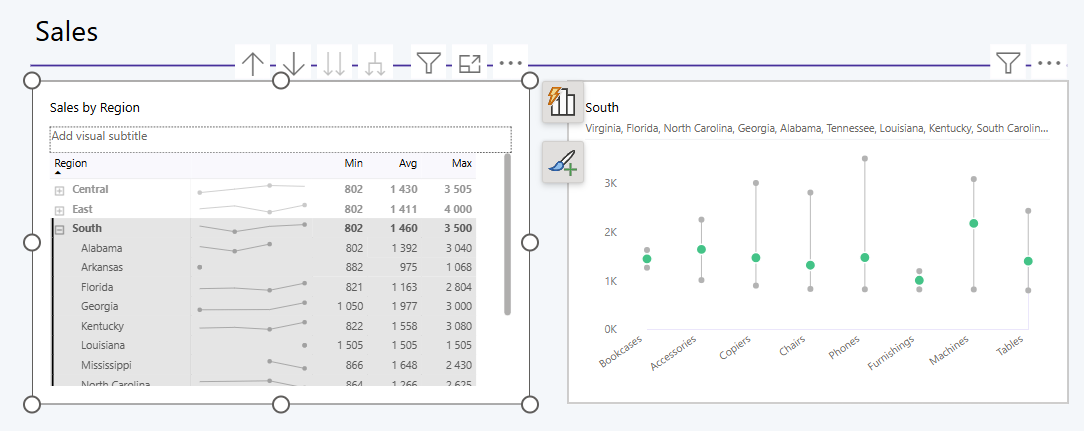
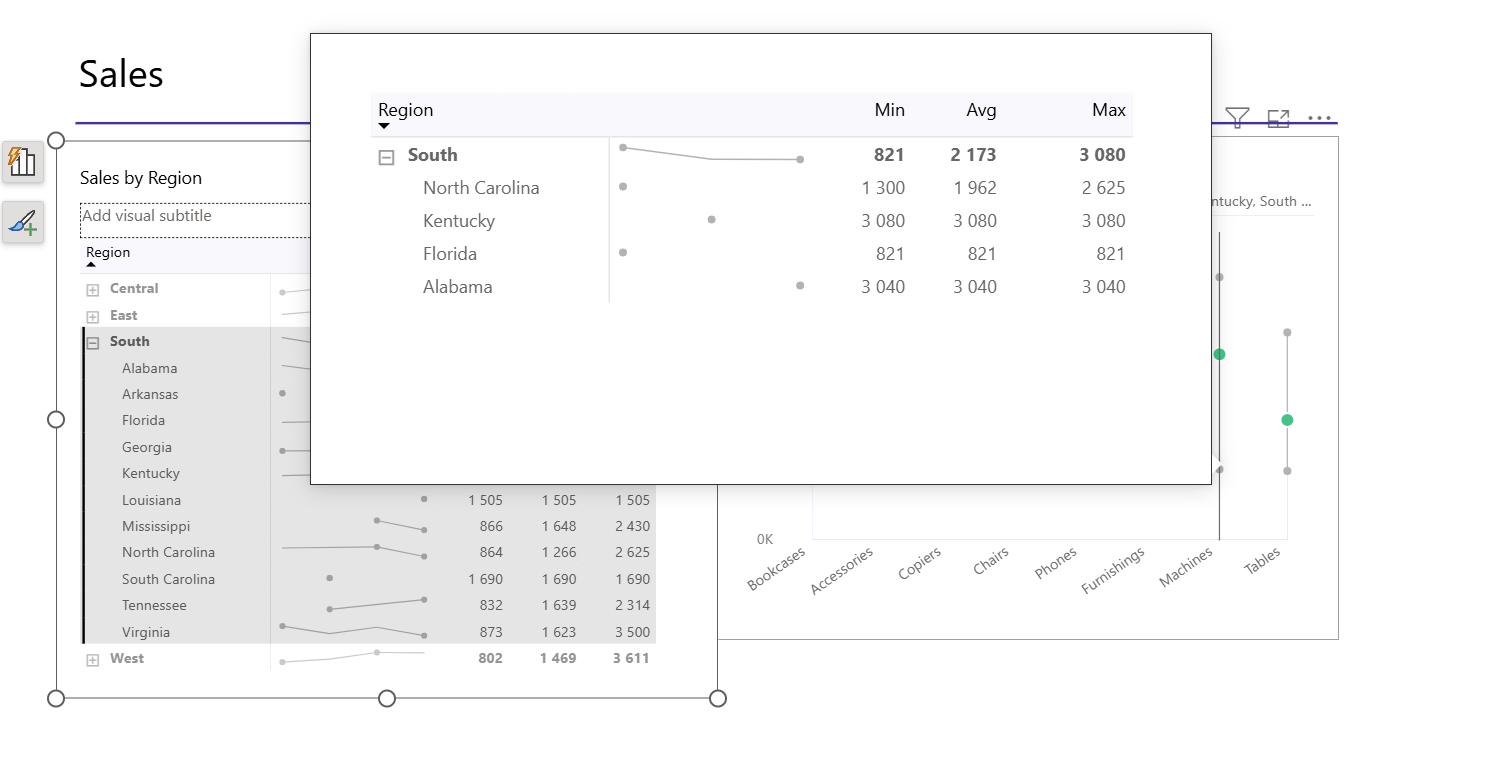
Method 2: The Smart Way – Dynamic Measures OnlyTo avoid overlays (and keep tooltips!), modify your
measures to return blank when nothing is selected.
Step-by-Step
1. Update every measure used in the chart, like this:
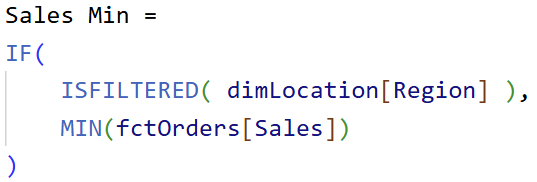
Repeat for Sales Max, Average, and any custom values.
2. The chart now disappears when nothing is selected, but it leaves a blank space. To make that more user-friendly, add a visual placeholder.
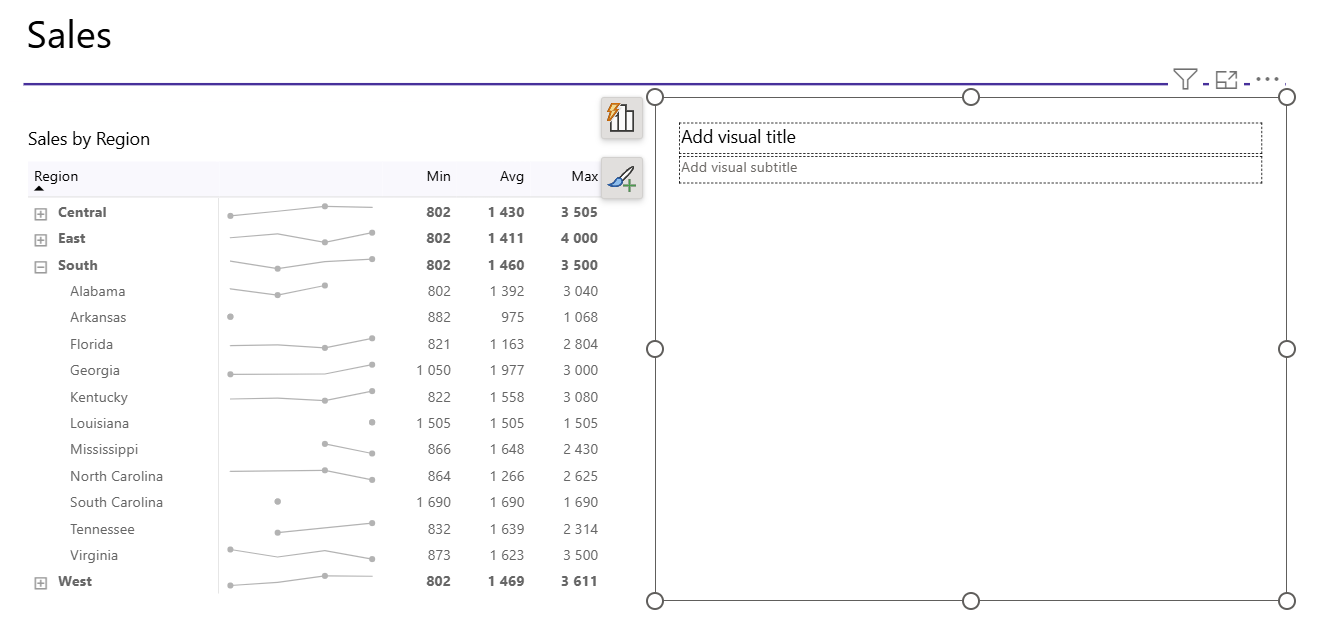
Optional: Custom Placeholder with SVGInstead of using text or shapes, use a
PowerPoint-generated image.
How to Add a Placeholder
- In PowerPoint, design a simple placeholder (e.g. “Please select a region”).
- Export it as an SVG image.
- In your visual, go to:
- Format → Plot area → Background image
- Upload the SVG and set fit to "fit" or "fill" - This image will only be visible when the chart is blank (i.e. when no region is selected).
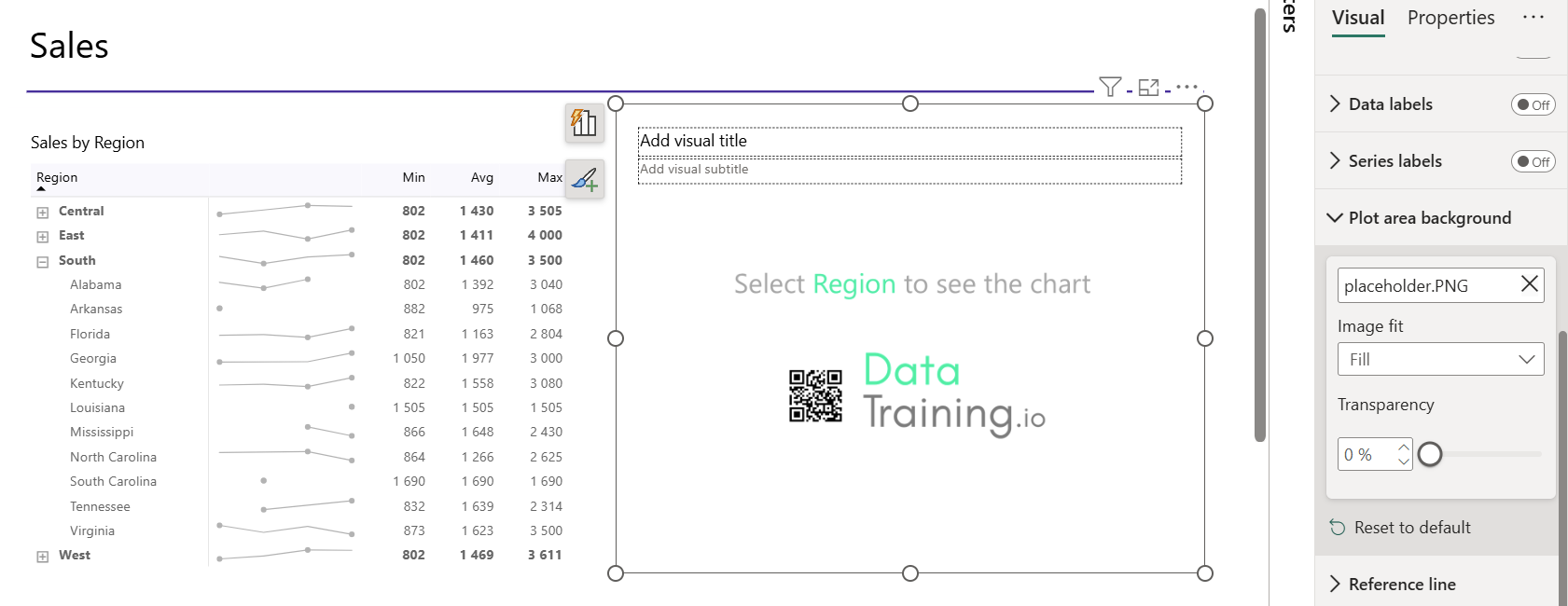
Now the visual looks polished even without interaction - and no overlay or shape tricks are needed.
Benefits of the Dynamic Method
Keeps tooltips
Works with dynamic titles and subtitles
Clean UX — no layering issues
Fully DAX-driven logic
Reusable in any report
Final Thoughts
This pattern can be extended:
- Switch images for different selections
- Add animations with bookmarks (if desired)
- Combine with user-based filtering for personalized dashboards
Hope you like it!
Give it a try and see how it works for you! I’d love to hear what you think or see how you use this trick in your own reports.